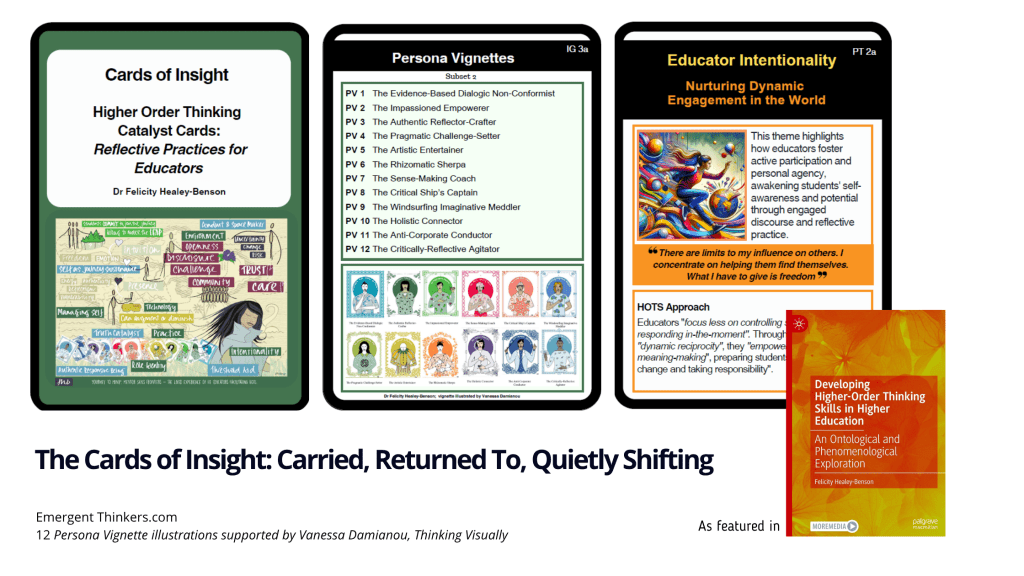
Earlier this year, something I had spent a long time making quietly arrived in the world as part of my new Palgrave Macmillian publication. My Cards of Insight, a set of 34 research-grounded reflective cards built from years of doctoral inquiry into how educators actually experience the work of facilitating deep thinking in students. Four subsets. Phenomenological themes drawn directly from educator interviews. Persona vignettes. The existential presence of digital technology in teaching. And the rarely named emotional, mental, and physical demands of the role. Since then, they have been travelling. Into a Masters programme. Into CPD sessions. Into conversations I did not expect. A picture is beginning to form, and it is worth sharing.
The Cards did not begin as a product but from my doctoral study on facilitating HOTS, not what educators do, but how they experience this work. The tension of it. The exhaustion. The moments of joy. The isolation. The quiet commitment to something they believe matters, even when the system does not always make space for it. Even as I was navigating the trials of finalising the thesis for examination, I was clear about one thing. This could not stay as an academic exercise. The research had surfaced something real, something practitioners needed access to, and The Cards were the answer to that intention.
Someone said something to me recently that I keep returning to. They had been sitting with a particular card for a while. Not analysing it. Just carrying it. They told me a card made them name something they had been avoiding. Not a revelation but something they did not know. Something they had known for a while, carried quietly but never quite brought into words. The card did not give them the answer but the space and permission to say it.
Others describe something slightly different. Not something suppressed, but something unnoticed. A pattern in their own practice they had never stood back far enough to see. The card created that distance. Briefly. Just enough.
I have been hearing versions of this more and more. From practitioners across different contexts, different roles, different countries. The details vary. The structure of the experience is remarkably consistent. Someone picks up a card. Not necessarily the one they expected. Sometimes the title catches them. Sometimes a quote from another educator, something that sounds like a thought they had but never said out loud. They sit with it. Not for long at first, but they come back, and then something shifts.
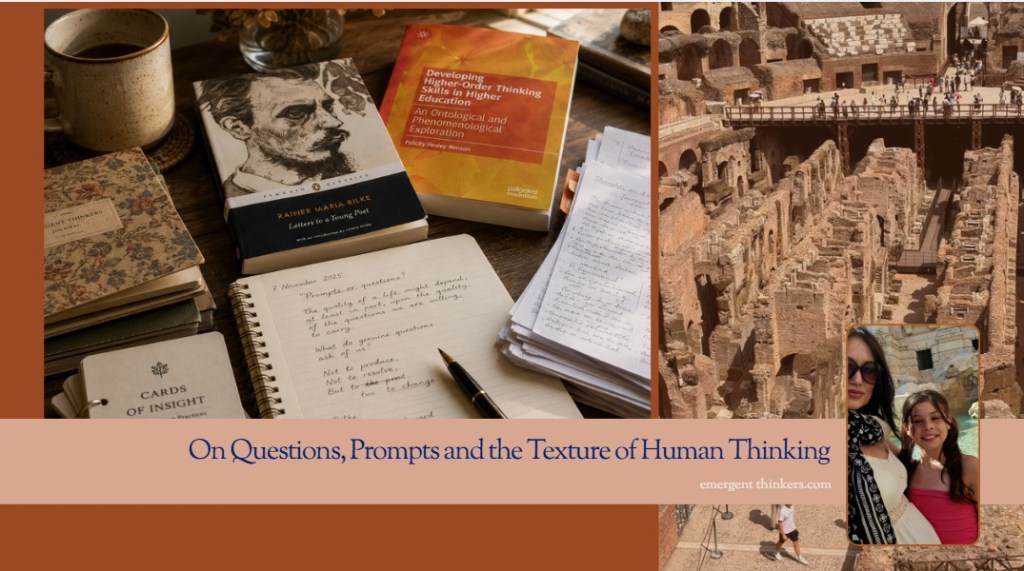
Most reflective tools give you a structure. Describe what happened. Evaluate. Analyse. Plan. The process is useful but tends to produce a particular kind of reflection, one already shaped by what you know how to say. The Cards instead gift provocation. Sometimes a quote that sounds uncomfortably familiar. Sometimes a question you were not expecting. Sometimes just a title that stops you, and you are not quite sure why. And then life gets in the way. You put the card down. Come back to it two days later and it says something different. That is not a failure of the process, that is the process. Not designed to be completed in a session but to carried. Into a difficult week or a conversation you have been avoiding or in the ordinary pauses of a day.
One practitioner described working backwards. He could not find his way in through the card’s language, so he started from something he already knew, a situation at work that had unsettled him, and moved towards the card until it suddenly met him there. What it opened up surprised him. Another described returning to the same card across several days. The second reading gave her something the first had not. A third said she could see herself using them in her car, waiting for her child’s music lesson. In the gaps.
The quotes inside the Cards come from real educators, speaking from real experience. One card holds this:
“I love my job but I’m so physically, mentally, and emotionally present. It can be very draining. I’ve suffered adrenal exhaustion.”
People recognise themselves in it immediately. Not because it tells them something new. Because that sense of being seen in what you carry quietly, it turns out, is where the reflection begins.
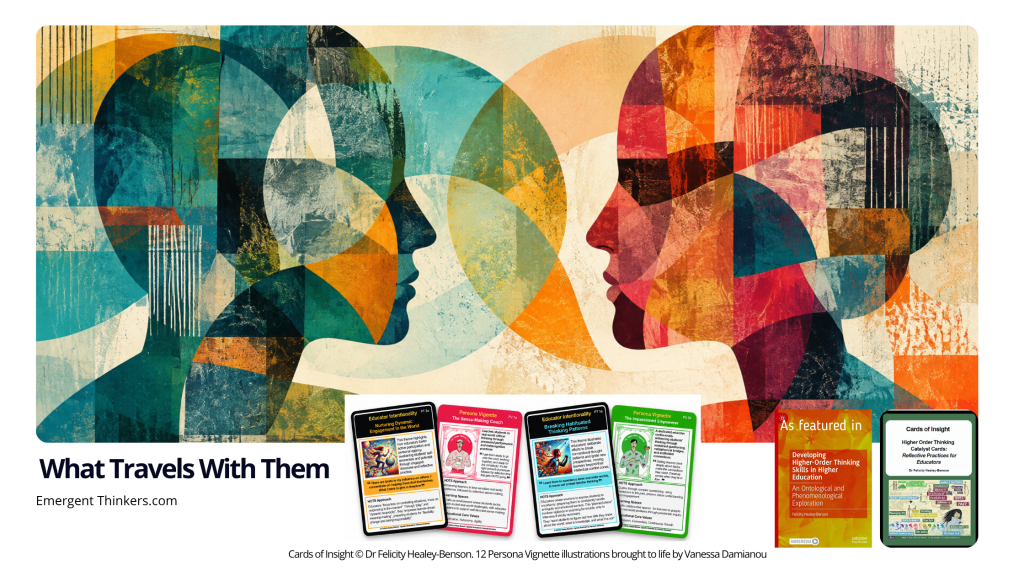
I have spent my career moving between the world of practice and the world of research. What drives me is not the research sitting in a library. It is what happens when philosophical depth meets the lived reality of a working week. The Cards are one expression of that. Philosophy made portable. Research made useful. Something that can travel with you, ask something of you, and leave you seeing your own practice a little differently.
If you work with educators or practitioners and are curious about whether the Cards might have a place in your context, I would welcome a conversation.
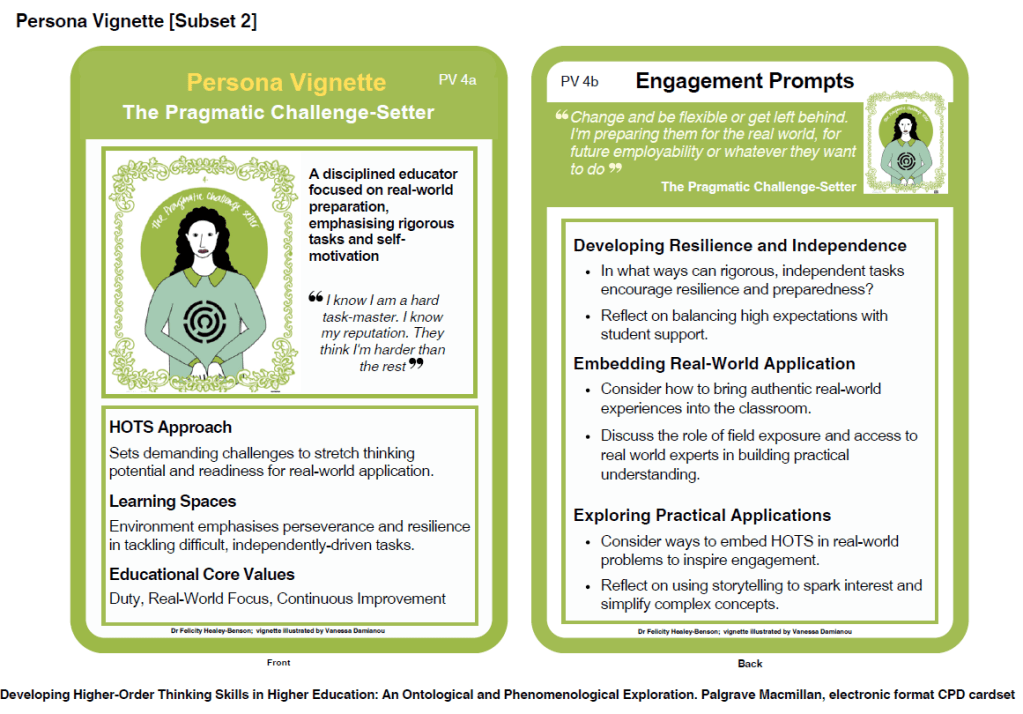
The 12 Persona Vignette illustrations as a subset of the full set were brought to life by Vanessa Damianou, Thinking Visually whose artwork translates my research-based personas into visual form.
Linked blogs




Leave a Reply