
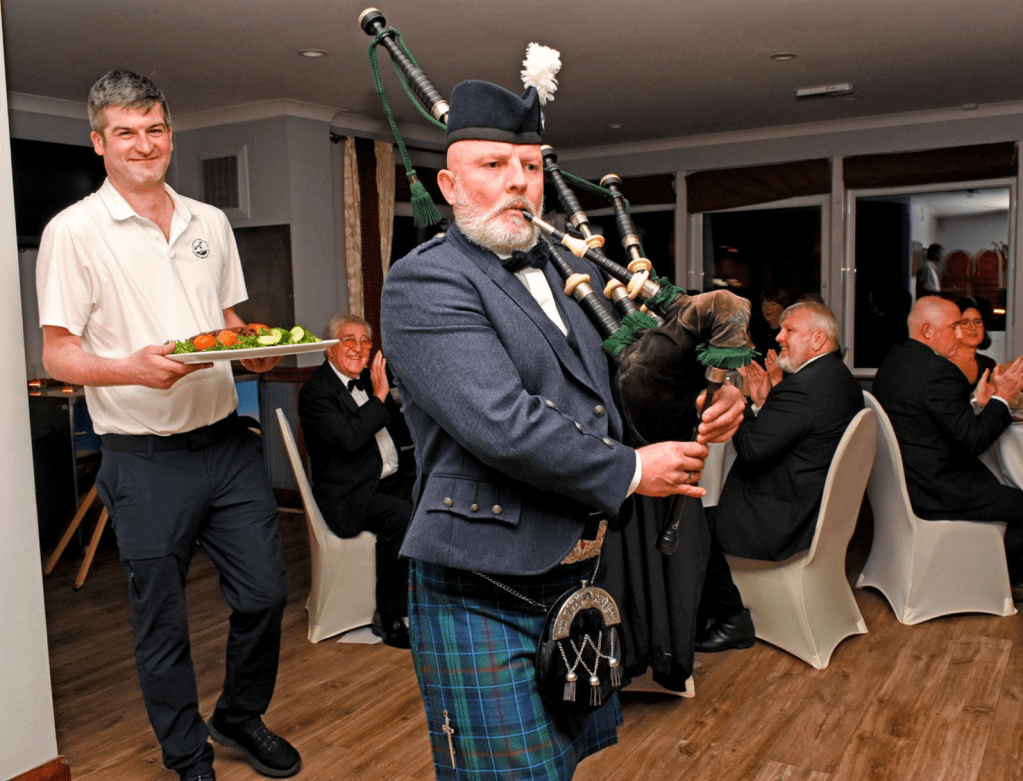
For this year’s Burns Night* my mum and I attended a supper promoted and hosted by Garnant Parc Golf Club. We were met at the door by a Scottish piper, who played us in as we crossed the threshold. The sound carried us forward before we had time to think about where we were going. Within moments, we were warmly received by the host and ushered into the heart of an unfamiliar room, into the centre rather than the margins of the gathering. There was no strangeness, no need to work out where we belonged. The welcome did its work immediately, settling us and drawing us in.
*Burns Night [25 January] celebrates the life & legacy of Scotland’s National Bard, Robert Burns.
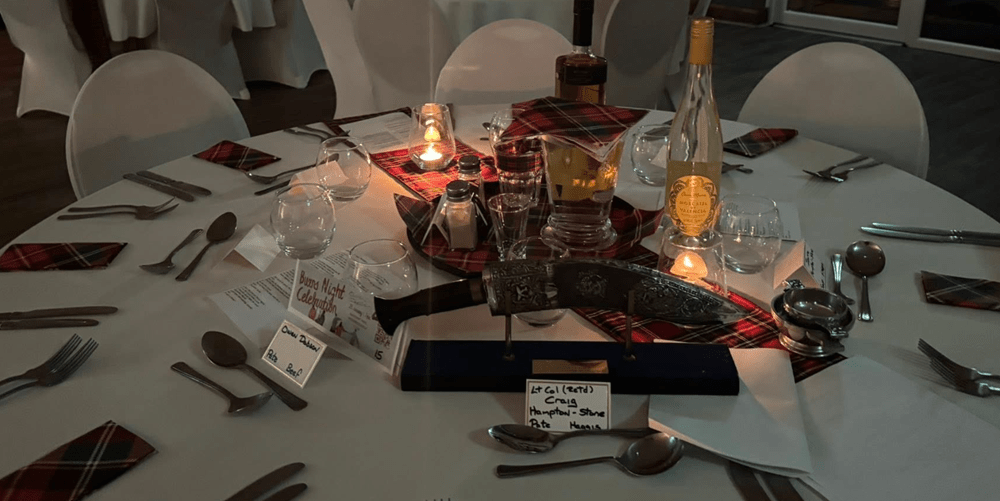
As we took our place at our beautifully laid table, I reflected on how much I had brought with me. Not in any grand or declarative way, but as a residue of recent time spent in Glasgow, moving through the city and the University, attentive to how place holds memory. My mother was born there, to Irish parents from the west coast, and that layered Celtic inheritance has always shaped my sense of home quietly rather than loudly. Here, tonight, immersed in a Burns celebration, something familiar stirred. Not nostalgia, but recognition. A way of noticing welcome, humour, and the dignity of ordinary life.
The evening unfolded at an unhurried pace. Food was not simply served, but welcomed. Fabulously prepared traditional courses arrived with ceremony, piped in not to impress, but to mark time. Language did not sit in the background as accompaniment. It interrupted the meal, asked for silence, and reorganised the room around listening. You could not half attend to it. You had to give yourself over.
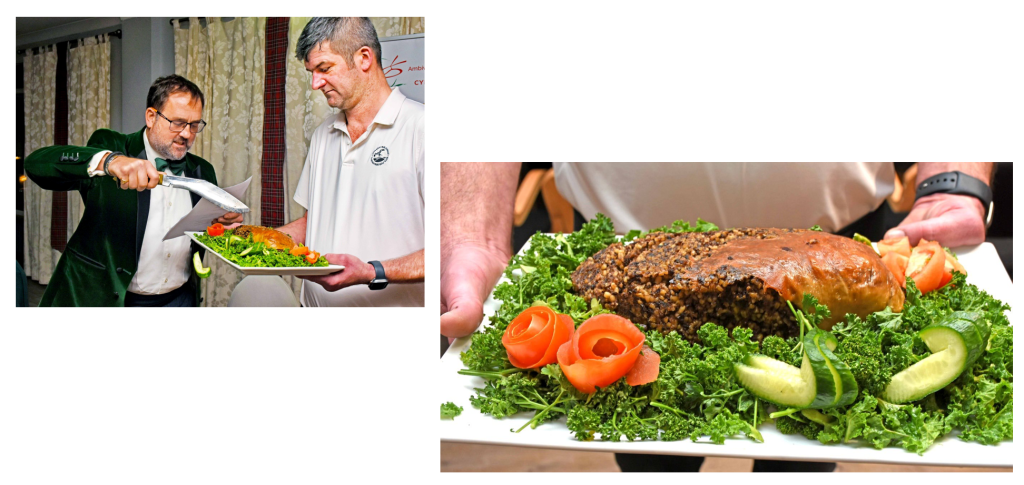
When the haggis was brought in and the Address began, the room shifted again. The poem, powerfully read by our host, is often remembered for its exuberance and humour. But listening closely, something sharper cut through the performance.
“Is there that o’er his French ragout,
Or olio that wad staw a sow,
Or fricassee wad mak her spew
Wi’ perfect sconner,
Looks down wi’ sneering, scornfu’ view
On sic a dinner?”
The laughter came easily, but the question did not dissolve with it. Burns is not simply praising a humble dish. He is taking aim at refinement that has lost its grounding. At food that is elaborate, impressive, and named, yet somehow fails to nourish. What is being mocked is not sophistication itself, but distance. Distance from labour. Distance from appetite. Distance from what actually sustains.
Listening to that line, I could not help but feel how far this runs against the current rhythms of so much contemporary work. In many circles now, research, academic writing, and online communication are being pulled towards speed, visibility, and constant production. Increasingly, this acceleration is assisted by AI. Tools that help shape sentences, summarise arguments, and keep pace with an ever-expanding flow of content. And yet, even when used well, they sit within a wider culture that rewards fluency over struggle, finish over formation.
What is rarely acknowledged is what this does to the texture of thinking itself. How easily the slow labour of reading, the awkwardness of not yet knowing what we think, the patience required to stay with a text or an idea until it begins to resist us, can be quietly bypassed. Like the refined dishes Burns mocks, the result can look impressive, even convincing, while leaving something essential unfed.
Sitting there, listening, I felt how much this mattered to me right now.
I spend my days reading and listening to writing that arrives increasingly smooth, increasingly confident, increasingly complete. Texts that have the look of coherence and the sound of authority, but that leave little trace once encountered. No resistance. No sense of having been wrestled with or lived through. Burns does not let us off lightly here. He insists that substance matters. That nourishment is not accidental. That what sustains us carries the marks of time, labour, mess, and care. You have to slow down to hear that insistence. You have to listen properly.
Later, as the evening drew to a close, we stood together with friends new and sang Auld Lang Syne. Arms crossed. Voices uneven. It was not polished, and it did not need to be. What mattered was not how well it was sung, but that we stayed with it together until the end. There was something quietly generous in that moment. A sense of being bound, however briefly, through shared attention rather than shared perfection.
Burns Night did not offer answers to the pressures I am navigating in my own world. But it did offer a way of noticing what is at stake. Substance over show. Nourishment over efficiency. Listening that asks something of us, rather than language that simply arrives, already done. That reminder felt both timely and grounding.
Huge thanks to Garnant Parc Golf Club and Lt. Col. (Retired) Craig Hampton-Stone for hosting such a generous and welcoming evening, and to all the wonderful guest who made the evening very special. Credit to the skills of Pipe Sergeant Richard Goodwin, from the City of Swansea Pipe Band. It was a pleasure to be there, and a further honour to help raise funds for the Wales Air Ambulance Charity.
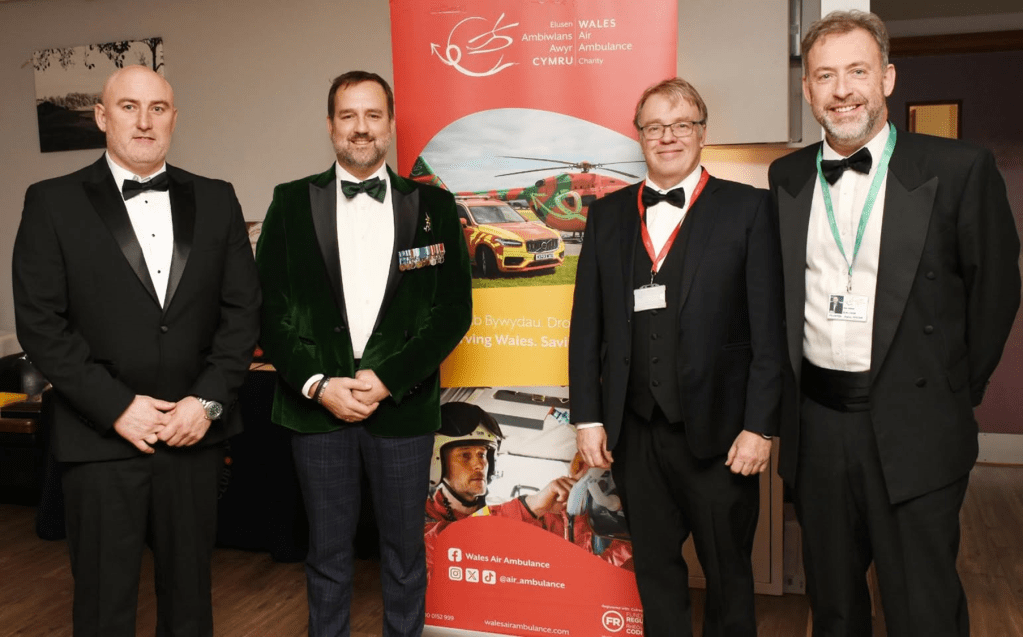
Linked post https://www.southwalesguardian.co.uk/news/25796232.burns-night-garnant-park-members-golf-club/

 Emergent Thinkers™
Leave a comment