
“Scotland’s friendliest city” they call it, and they are right. From the cobbled streets to the laughter that carries from cafés, Glasgow radiates warmth. Even as George Square undergoes its eighteen-month restoration, with statues carefully lifted for renewal and new granite laid in place, the hoardings around it tell stories of the city’s past and future. The project, part of Glasgow’s wider regeneration, feels like a living metaphor for the city itself, honouring heritage while creating room to breathe and grow. Glasgow moves with an energy that feels both historic and forward-looking, a city forever re-making its heart.
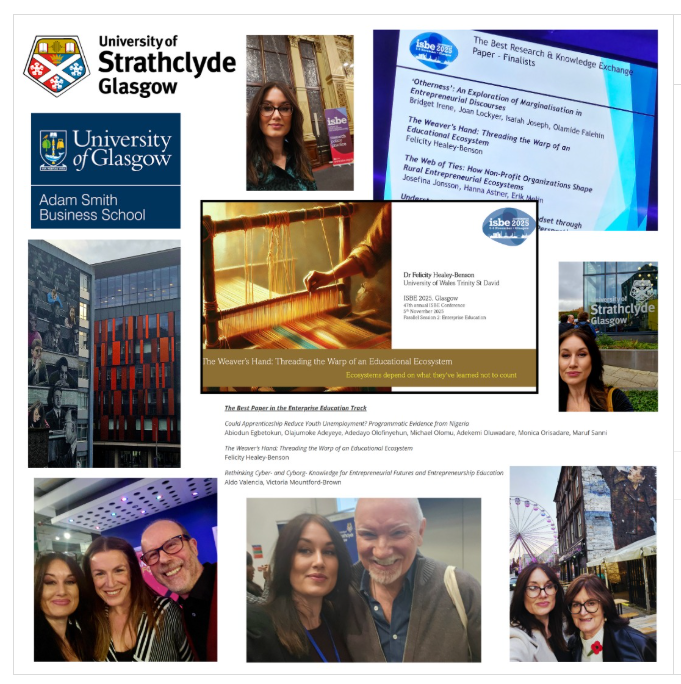
Amid this atmosphere of renewal, this year’s Institute for Small Business and Entrepreneurship (ISBE) Conference (47th), hosted by the University of Strathclyde and the University of Glasgow, gathered people who care deeply about how entrepreneurship can create genuine value for society. The conversations were alive with generosity and purpose, the kind that remind you why this field matters.
Two nominations, many hands
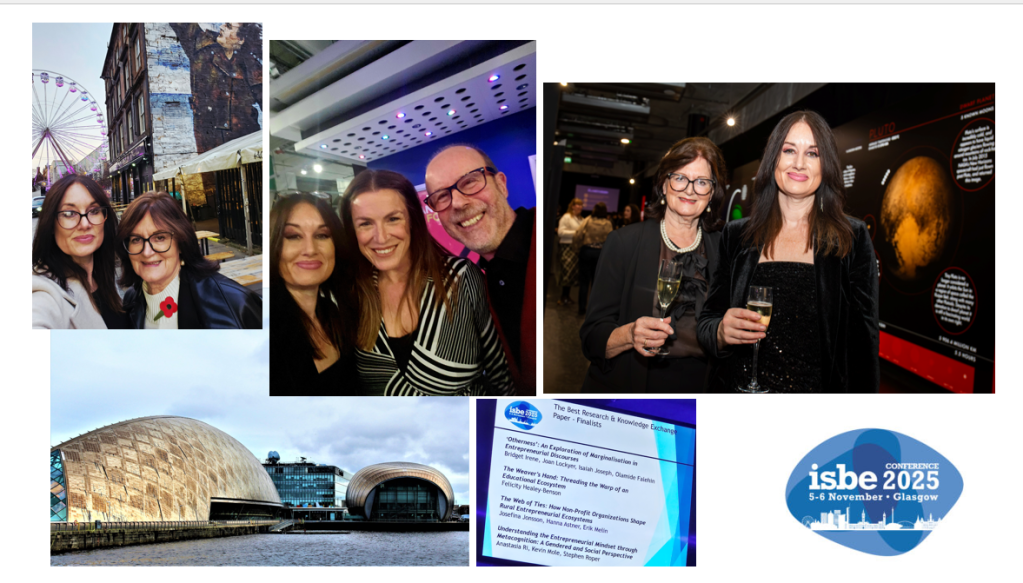
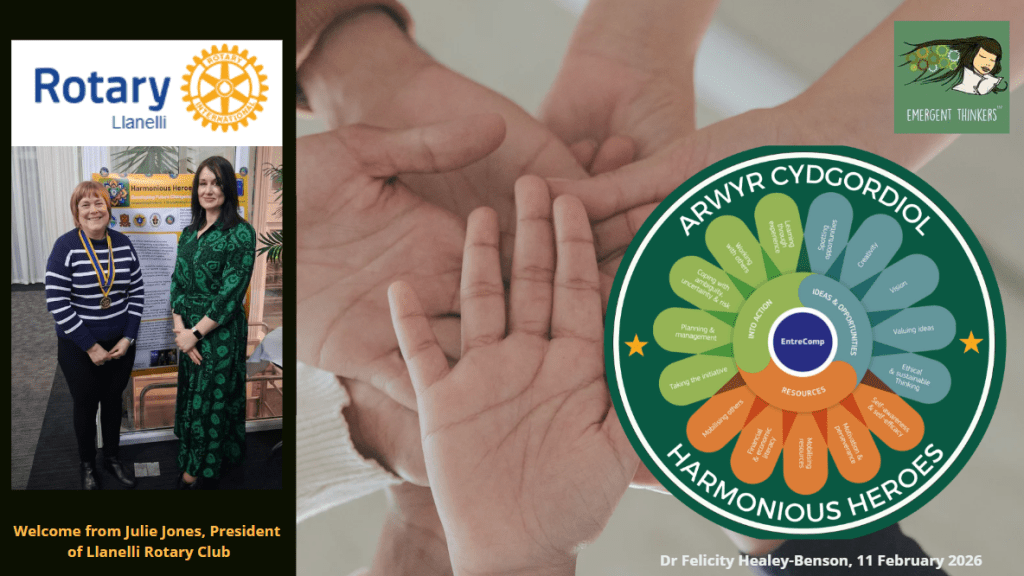
I felt both thrilled and humbled “The Weaver’s Hand: Threading the Warp of an Educational Ecosystem” was named a finalist for Best Paper in the Enterprise Education Track. The research emerged from the Harmonious Heroes initiative and the wider civic ecosystem mapping in Llanelli, where schools, local organisations, and community partners have been exploring how entrepreneurial learning can create social value. It traces the unseen threads of trust, coordination, and care that sustain collaboration even when resources are stretched. This recognition belongs to the collective endeavour itself, honouring the teachers, pupils, civic actors, and local partners who continue to weave connections that strengthen their communities.
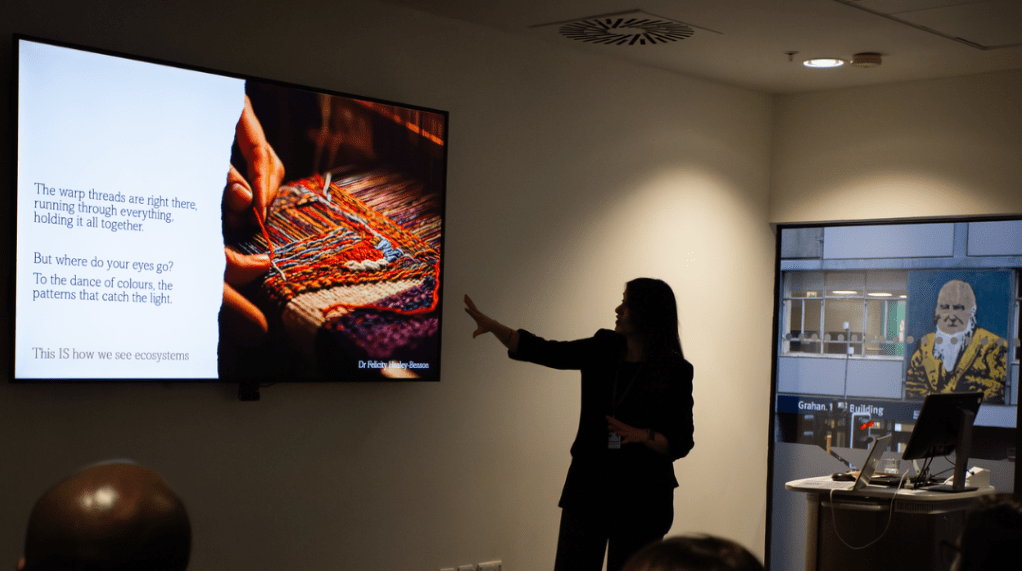
Then came a second nomination, this time in the Best Research and Knowledge Exchange category. That recognition felt particularly meaningful because it affirmed that the work taking shape across schools and civic networks is being seen for what it truly is: a living exchange between research and practice.
A conversation that stayed with me
And then, as if the week could not give more, I met Sir Tom Hunter, the entrepreneur and philanthropist whose foundation has become a major force for social change in Scotland. We spoke honestly, person to person. I told him I had been living what he calls the no-moan zone, doing the work, trying to hold things together, and feeling how hard that can be without power or resources. He listened. For him, collaboration remains the heartbeat of the Scottish Enlightenment, people learning with and from one another, peer to peer, helping each other to grow.

His words resonated deeply because they echo what ISBE itself stands for: collaborating across entrepreneurial ecosystems and creating opportunities for inclusion, innovation, sustainability, resilience, and growth. These ideas live through those who work quietly between systems, joining what does not easily meet, holding tension so that collaboration can take form. They are the weavers, the boundary spanners, the ones who keep the fabric alive.
A city that feels like home
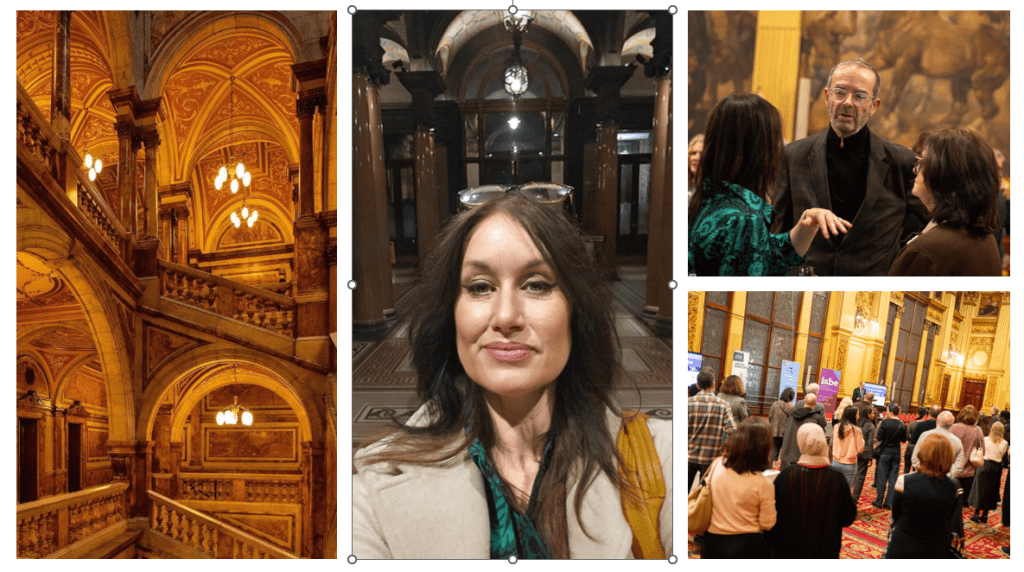
One of the most memorable moments came during the civic reception held in Glasgow City Chambers, a building so breathtaking that locals often forget the splendour within. Its marble halls and sweeping staircases gleam with intricate mosaics and sculpted stone, and it is said to contain more marble than the Vatican. Standing there beneath the chandeliers, I thought of my own connections, as someone caught up in the movement of entrepreneurship and also my mother was born and raised here in this city, before my grandparents moved south..
I was grateful that my mum could join me for part of this visit, including ISBE’s Gala Dinner at the Glasgow Science Centre, where we celebrated under the glittering lights of the city reflected in the river. Earlier that day we had wandered together along the waterfront to visit the Billy Connolly mural, where laughter and affection seem to rise from the brickwork itself. Standing there, then later among colleagues at the gala, I felt how heritage lives not only in buildings but in humour, memory, and shared delight.
The city’s friendliness is no myth. From the students guiding delegates to the locals who stopped to chat, Glasgow’s warmth was constant. Even the streets under renovation carried an air of renewal, as if the whole place were quietly preparing for its next chapter.
Leaving with gratitude
ISBE 2025 will stay with me not for prizes or ceremonies but for its atmosphere of generosity. This community listens as much as it leads and believes that research matters most when it strengthens the fabric of real lives.
So here’s to Glasgow, to its humour, its heart, and its quiet brilliance. And here’s to all who keep weaving connections that help ideas and people to grow.



 Emergent Thinkers™
Leave a reply to Dr Felicity Healey-Benson Cancel reply