
Christmas often creates a pause that invites looking back, not to account for a year, but to notice what has been carried. For me, what gathers is work that has moved across education, research, and community spaces, often at their edges rather than their centres.
This year held many rooms. Classrooms and community halls. Mapping workshops. Conference rooms in Glasgow and Cardiff, where familiar questions were taken up again, in different company. More formal spaces too, including time spent at the Senedd during Global Entrepreneurship Week. Each space asking for a different quality of attention. Some I entered alone. Others I entered accompanied, sometimes by colleagues, sometimes by my mum, whose presence has long helped me listen more carefully and recognise what might otherwise pass unnoticed. It also reminds me of the steadiness that comes from not crossing every threshold alone.
So early in January, I found myself returning to familiar work with altered attention, aware that the ground beneath felt less secure, not only for me but for many working within the sector. In response, meetings, teaching conversations, research threads, and community commitments were no longer experienced as parallel tracks, but as sites where shared questions could be held more deliberately.
What settled me was not certainty, but coherence. The work still made sense in my hands. I trusted that feeling, perhaps more than I realised at the time. As the year unfolded, it asked for a different kind of listening. Conversations with colleagues took on a quieter, heavier tone. People spoke less about aspiration and more about endurance. About holding things together. About workloads that had quietly expanded, roles that had shifted without warning, and responsibilities that now sat alongside one another without space to breathe.
What I heard was not complaint but fatigue. A tiredness edged with care. Many were still committed to their work, showing up for students, communities, and teams, but with diminished reserves and little sense of protection. Some had held on through restructurings and rising demands. Others had watched colleagues leave, sometimes abruptly, sometimes with ceremony, always with consequence. Those who remained carried more, often without naming it.
Listening in this way altered my own orientation. It sharpened my attention to what sustains people when formal structures falter, and to the quiet forms of relational labour that keep systems from collapsing altogether. It also clarified something I had already begun to sense; that coherence is not the same as ease. It can be held under strain. It can persist even when conditions are misaligned.
This was not something I observed from a distance. I learned how easily coherence can be mistaken for stability, and how much effort it takes to keep work aligned when institutional ground shifts beneath you. There were moments when I had to become intensely adaptive, not as a tactic, but as a necessity. I held on where I could, stepped back where I had to, and learned how to keep moving without burning what I might still need.
And what helped was not speed or certainty, but continuity. Returning to work that could still be recognised, even when the conditions around it had changed. Research that remained slow and attentive. Educational and community work that asked for presence rather than performance. These were not separate endeavours. They were ways of staying oriented when much else felt unstable.
This continuity took tangible form. Through the Learned Society of Wales funded ecosystem mapping work, and through my ongoing efforts to develop and enact an entrepreneurial pedagogic model grounded in place, educators, business owners, community practitioners, and civic actors came into the same rooms. Not to produce quick solutions, but to see the system more clearly, and to notice where effort, goodwill, and coordination were already being carried. The work was participatory and, at times, uncomfortable. It surfaced a shared recognition that much of what sustains local enterprise and learning lives between roles, organisations, and funding lines.
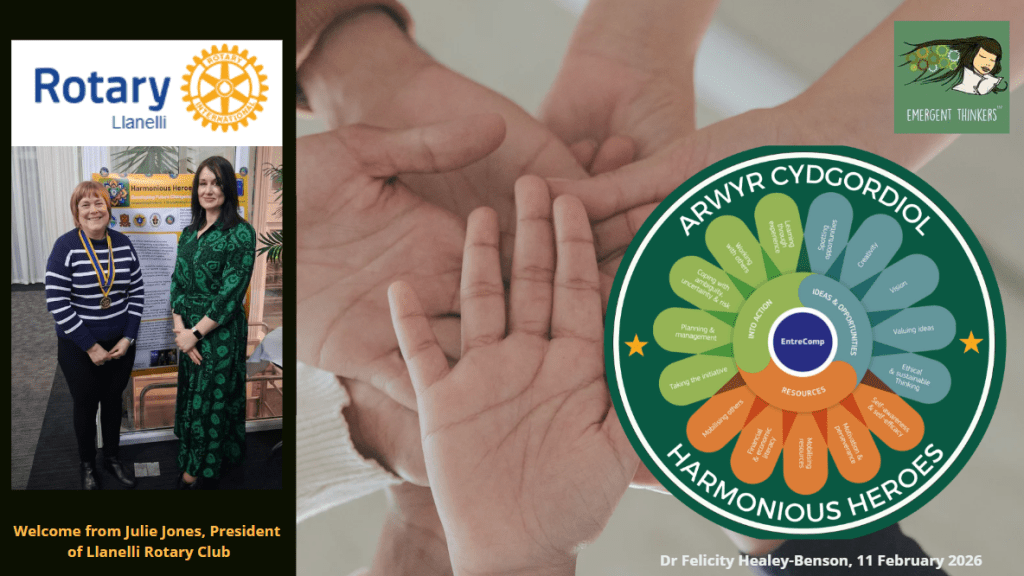
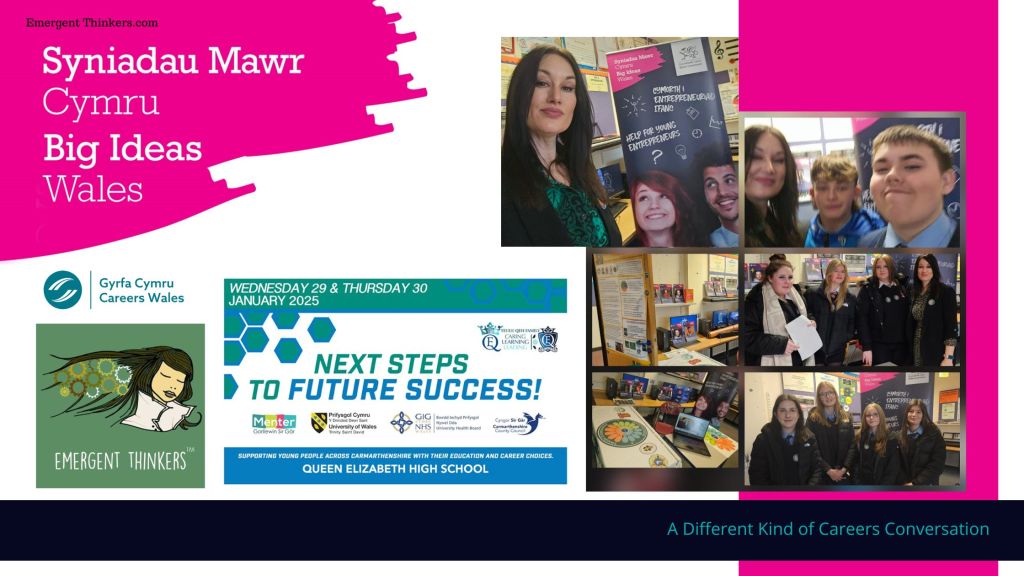
In schools, Harmonious Heroes grew through shared labour and trust, showing how young people, teachers, families, and local partners could work together without reducing learning to outputs alone. In professional spaces, whether teaching, supervision, or leadership development, I returned to the same questions. How do we sustain thought under pressure? How do we remain ethical when systems reward speed over care? How do we stay open to complexity without becoming hardened by it?
There were also moments of recognition this year, when work that had been carried quietly was named by others. These mattered, not as endpoints, but as gentle confirmations that coherence can still be felt beyond oneself. They did not resolve precarity or erase fatigue. They simply reminded me that the work had not disappeared, even when it had become harder to carry.
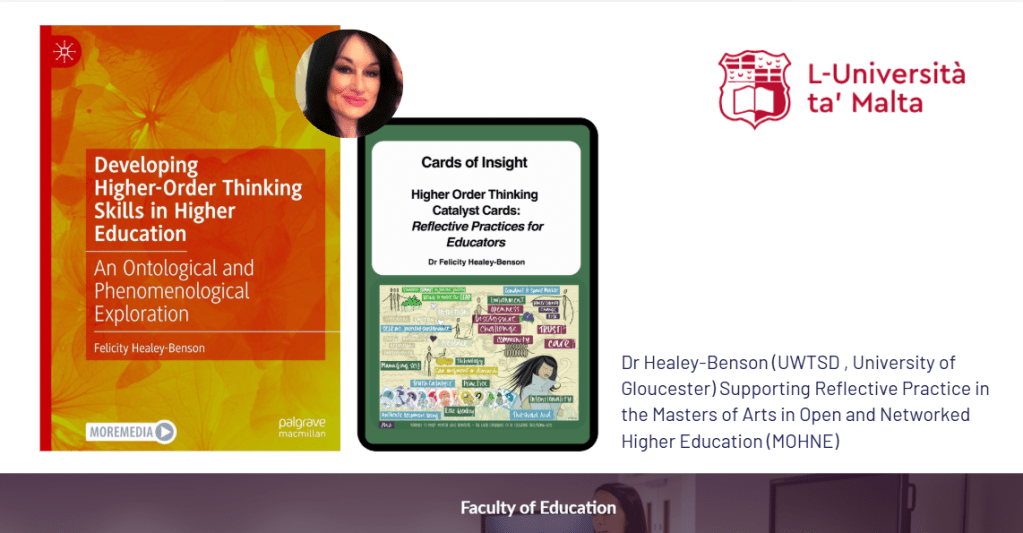
At the close of the year, something draws nearer. A book, shaped over years of phenomenological research and practice, is close to appearing. I find myself less preoccupied with what it argues than with the simple fact of its arrival, a material reminder that slow work can still take form, even when conditions remain uncertain.
As Christmas settles in and the year loosens its grip, I find myself less interested in what has been achieved than in what has been sustained. That, for now, feels enough. What continues is not a single role or trajectory, but a way of working. One that listens carefully, holds relational labour seriously, and resists the urge to collapse experience into metrics or narratives of resilience. Perhaps this way of attending is something others, too, are quietly holding onto, even when much feels unsettled.
Felicity


 Emergent Thinkers™
Leave a comment