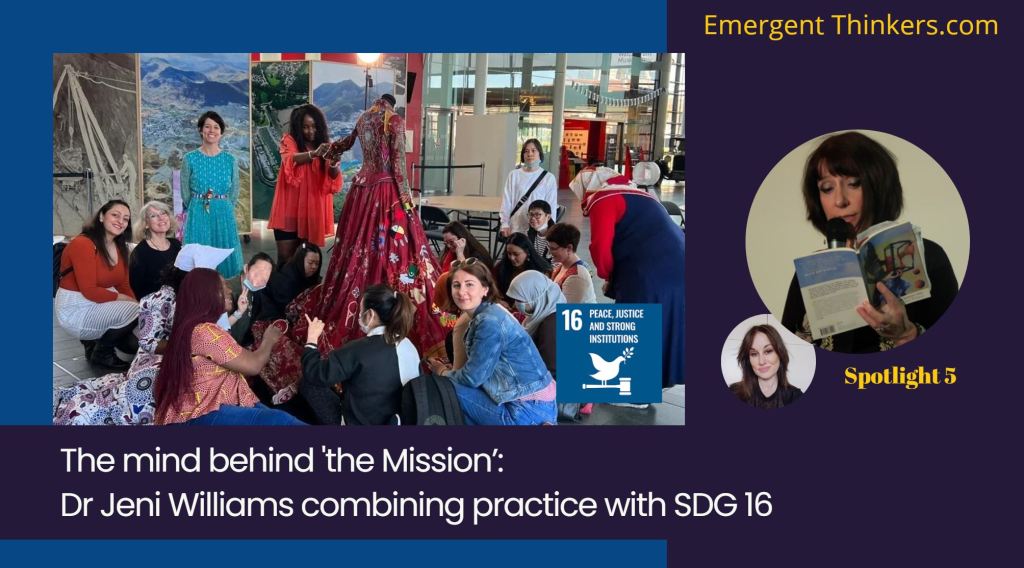
In this ‘Mind Behind’ interview session, I explore the work of Dr Jeni Williams, an academic, writer, and community activist, and its connection to the United Nations’ Sustainable Development Goal 16 (SDG 16).
Dr Jeni Williams is a writer, academic, and community activist with a focus on amplifying marginalised voices and fostering key life skills. Her literary credentials include poetry collections such as Being the Famous Ones, with articles and reviews featured in many magazines and journals such as Agenda, New Welsh Review, and The London Magazine. Jeni has lectured extensively on literature and creative writing at universities across South Wales. Through her multidisciplinary efforts in academia and grassroots community engagement, Jeni champions inclusive storytelling and fosters cross-cultural understanding. Her work encapsulates the harmonious intersection of literary expression and social advocacy. In 2022, she was awarded a Community Cohesion ‘Unsung Heroes Award’ for her work with Asylum Seekers and Refugees.
Jeni, what do you think about linking your work to SDG 16, which aims to promote peaceful and inclusive societies for sustainable development, provide access to justice for all and build effective, accountable, and inclusive institutions at all levels?
It’s interesting to view my life’s work through the lens of SDG 16. While I’ve never consciously considered it, I can see my efforts aligning with its principles—from conservation in school, working with the homeless in the 70s, being part of community and women’s groups, and supporting asylum seekers and refugees since 2004. In all these endeavours, I’ve strived to uphold self-determination, self-agency, seek partnerships and mutual support networks – an underlying thread of promoting inclusive, peaceful, and just societies.
Jeni, your academic journey has taken you from a childhood interest in science to a broader involvement in the arts, particularly poetry and theatre, and in questions of social inclusion. Could you share the inspirations that drove your passion for poetry and informed your career?
I have always been interested in structure, in how things work whether in animals or chemical experiments, or in literature or art. From a young age, I wrote stories and poems, but, as a child, I was also drawn to science, initially wanting to be a microbiologist until realising at 16 that it would involve animal experiments, so I switched to the arts.
After trying community work, I eventually studied English at Swansea University as a mature student. On graduating, I received a British Academy scholarship for my PhD tracing the changing meaning of the figure of the nightingale, frequently called Philomel, across texts spanning Homer to Elizabeth Barrett Browning. I delved into pre-Assyrian fables, ancient Greek works, learned Latin to explore classical Greek and Christian poems from the 4th-12th centuries, through to medieval, renaissance, 18th century and Romantic eras. This literary journey mirrored societal changes, evolving religious and political narratives, offering insights into the interconnected patterns of history, culture, and their interplay in our lives.
Despite sounding esoteric, the study was a perfect introduction to social changes and the hidden presence of ideas that challenged the narrative norm. In the myth, the young girl, Philomel, is raped by her brother-in-law, silenced by having her tongue cut out, but weaves a tapestry to tell her sister, Procne, what has happened. When Procne rescues her, the sisters revenge themselves on the rapist, only for Zeus to stop the cycle of violence by transforming them all to birds. Philomel gains a new voice as the nightingale who sings against oppression. After all, the nightingale is a symbol of poetry.
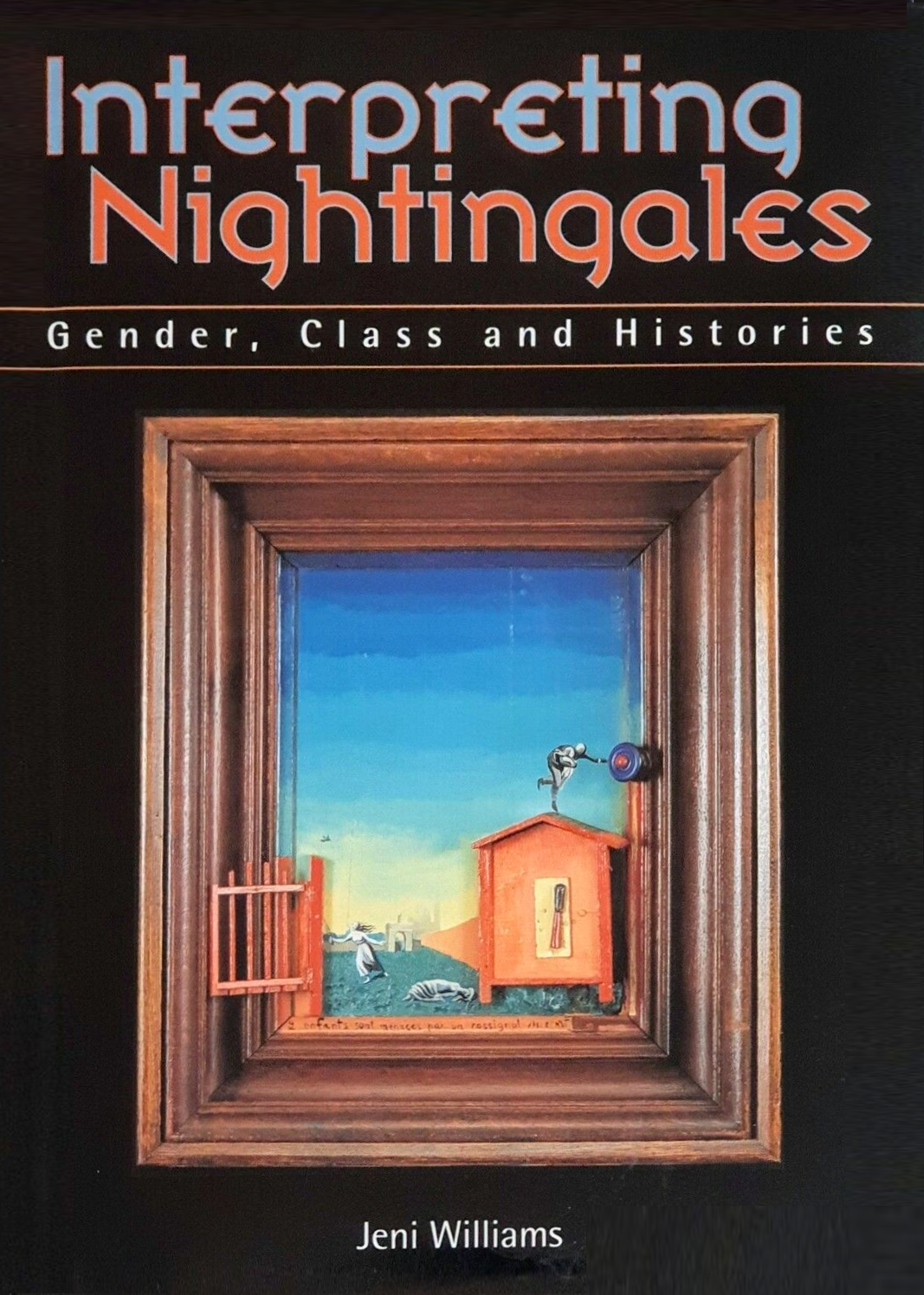
My passion for the passionate nightingale is part of my ongoing concern with returning voices to the voiceless. When I adapted my PhD as a critical monograph, Interpreting Nightingales, Gender, Class and Histories, I was delighted that New York’s Museum of Modern Art gave permission to use Max Ernst’s surreal masterpiece of 1924, Two Children Are Threatened by a Nightingale (Deux Enfants sont menacés par un rossignol), for the cover. It is an extraordinary image that sums up the dangerous complexities of art, myth, and psychology.
How have you managed to incorporate social activism within an academic life?
For me, the two are inextricably linked. When teaching literature or creative writing, I explored how messages achieve meaning, which is equally crucial when working for social justice. My involvement with asylum seekers and refugees since 2004 has been enormously enriching, learning from people with very different backgrounds to myself, but with a shared interest in creative action and education. In 2006, I was a founder member of Swansea Women’s Asylum and Refugee Support Group, where I remain chair. In 2020, the group joined the Sisters Not Strangers Coalition, where I remain an active representative.
Jeni, could you reflect on how the unique elements of your heritage and upbringing have shaped your distinctive approach in both your academic and community-oriented work?
Although I met Welsh speaking relatives during family visits, neither the language nor the history and literature of Wales were ever mentioned in my English schools. Furthermore, relatives contrasting stories made me aware of the selectiveness of established narratives from an early age. My ex-husband’s time working underground made me bitterly aware of the hostile narratives about mining communities and the significance of strikes. Involvement in the 1983 miners’ strike as I started university also exposed me to a punitive system’s casualties. Meanwhile, living in a Welsh speaking mining village taught me the value of cooperation and working together that have stayed with me my whole life. This background has shaped my values, encouraging an openness to new ideas and fostering a sensitivity towards the subtleties of communication. In both my professional and my activist lives, this has meant creating spaces where different voices and experiences are heard and interconnected. I believe that the quest for interconnection is vital in both education and community work.
Jeni, how do you perceive the role of language and class in shaping individual lives, and how does understanding these in more depth contribute to SDG 16?
Language and class are intricately intertwined in shaping our lives, playing a central role in my work across different cultures and communities. Understanding the nuances of language goes beyond mere communication; it’s about understanding the beliefs, values, and experiences they convey. The immigrant who cannot communicate through English is at a huge disadvantage. Class, like race, influences how individuals interact with the world and are perceived by others. My experiences have shown me how language and class can act as barriers—and also as gateways. Recognising and navigating these elements thoughtfully is crucial in education and community work for fostering inclusive and effective communication. This understanding directly contributes to SDG 16’s goals of building just and inclusive societies.
Jeni, are there any encounters that particularly stand out and have shaped your approach to community engagement and social work?
Absolutely. One of the most powerful experiences in my community work was when I was posted to Swansea in 1975 to work in a night shelter with homeless people. Many of these individuals were ex-sailors, and their stories moved me deeply. Accustomed to life at sea, they struggled significantly after retiring. Most battled with alcoholism, a legacy of hard drinking when off the boats that spiralled out of control in when they were no longer drying out at sea. Engaging with these men, hearing about their lives, and often their bitterness and anger, helped me understand the impact of social structures on individual choices, and the importance of empathy in human interactions. This encounter was not just a lesson in social work; it was a profound insight into the human condition and has been instrumental in shaping my approach to community engagement and education.
And on any experiences working with asylum seekers or in politics?
The fact that I know and have worked with asylum seekers for the past 20 years has made me very aware of how vulnerable groups serve very well as scapegoats, demonised by politicians to deflect criticism of their own failures. Working with these disparate groups demands cultural sensitivity and empathy. They confront images of themselves as unscrupulous and unqualified, coming here for an easy life. In actual fact, many are highly qualified and have left a good life behind, losing everything to come here and barely survive. Most of my actions attempt to build on the skills they had before they were forced to leave their homes. Many do tell their stories, but usually only after I have known them for some time. but there are people I have known for years without ever being told their story. What is necessary is acceptance and healing. In politics, similarly, the need for empathy and cultural awareness is paramount. My experiences in these areas have reinforced my belief in the power of empathy and acceptance as ways to foster greater understanding and cooperation in both community work and the political sphere.

Finally, Jeni, in your view, how should educational approaches evolve to better prepare students for the complexities of the modern world?
I believe in learning to pay attention to detail, in developing human interaction, and in the importance of spoken and written language. Reading and writing are essential skills, so I worry about attenuated attention spans that neglect analysis. I’m very concerned at their dismissal as ‘old fashioned’ in so much of our education. Relating learning to ‘real life situations’ is important but must always be accompanied by close and intense focus. Any refugee will tell you that good English is crucial for employment. Every job in our digital world entails reading, analysing documents, and writing reports. We should prepare students for these tasks.
But reading and writing are also life skills. Without them, it’s difficult to build vocabulary, expression, and the ability to challenge financial, sexual, or extremist manipulation. I am immensely concerned about the vulnerability of those lacking critical skills to counter conspiracy theories. Such dangerous manipulations are increasing in today’s world and our education should prepare students to question attempts to restrict their thinking and control their minds .
I believe that educational approaches must evolve to better prepare students for the complexities of the modern world, but these should stress the ability stand back and assess situations both in work and in their personal lives, ensuring inclusive and representative decision-making. A more open mind will promote peace and justice, promoting the rule of law to reduce violence and strong institutions to support an active civic society.
Thank you, Dr Williams, for generously sharing your inspiring journey and the invaluable lessons you’ve gathered throughout your academic and community engagement endeavours. Your story serves as a compelling testament to the transformative power of education and its far-reaching impact on individuals and communities alike. It underscores the importance of embracing interdisciplinary approaches, fostering empathy, and appreciating linguistic and cultural nuances as we navigate the complexities of our ever-evolving world. Your contributions to literature, academia, and community work exemplify the spirit of harmonious entrepreneurship and its alignment with the Sustainable Development Goals.
Felicity
Dr Jeni Williams Bio
Dr Jeni Williams is a writer, academic, and community activist, with significant contributions to literary and art criticism. She has published poetry, articles, and reviews in a wide range of magazines, including Agenda, New Writing, New Welsh Review, Orbis, Planet, Poetry Wales, and The London Magazine. Her debut poetry collection, Being the Famous Ones was published by Parthian in 2009.

In academia, Dr Williams has lectured across the full range of literature and creative writing in universities across South Wales: including the University of Wales TSD (UWTSD), and Swansea, Swansea Metropolitan, Cardiff and Glamorgan Universities. Her critical monograph, Interpreting Nightingales: Gender, Class and Histories, was published by Sheffield Academic Press in 1997. In 2005, she was contributing editor of Sideways Glances: Five Off-Centre Artists in Wales, Cardigan: Parthian. She has published widely in journals.
As an activist, Dr Williams ran creative writing sessions for women asylum seekers and refugees in Swansea and was contributing editor of Fragments from the Dark: Women Writing Home and Self in Wales (Swansea: Hafan Books 2006), which published these alongside well-known Welsh women writers. In 2017, she ran more sessions and co-edited a second volume for Hafan, My Heart Loves in My Language.
Jeni has also produced a suite of short films for the OU Covid 19 Chronicles project. The Covid Chronicles https://www.youtube.com/@cov19chronicles/videos
These include:
- Interview with Sweeta Durrani – artist, feminist and activist refugee from Afghanistan
- Covid Conversation February 2021 – Refugee Activism During Lockdown
- Interview with activist and writer Loraine Masiya Mponela
- Taking footballs to school: a Zimbabwean refugee returns home
- Organising Food Boxes: a Refugee supports Vulnerable Women in Sudan
- The Red Dress Project comes to Swansea
- ‘Exile’: Afghan poet Jamila Abbasi reads her poem about her loss of home
- Challenging Desertification in Niger
Dr Williams actively participates in efforts to create inclusive communities and provide support to those in need. In 2022, she was awarded a Community Cohesion ‘Unsung Heroes Award’ for her work with Asylum Seekers and Refugees.
Further links:
The Red Dress: https://reddressembroidery.com/.
The Red Dress comes to Swansea: https://youtu.be/W8Gm50x4D2o?si=HJPy484gPSRsUV2o with members of the Women’s Group.
https://www.sistersnotstrangers.com
Previous ‘The Mind Behind’ Interviews: https://emergentthinkers.com/?s=mind+behind
 Emergent Thinkers™
Leave a comment