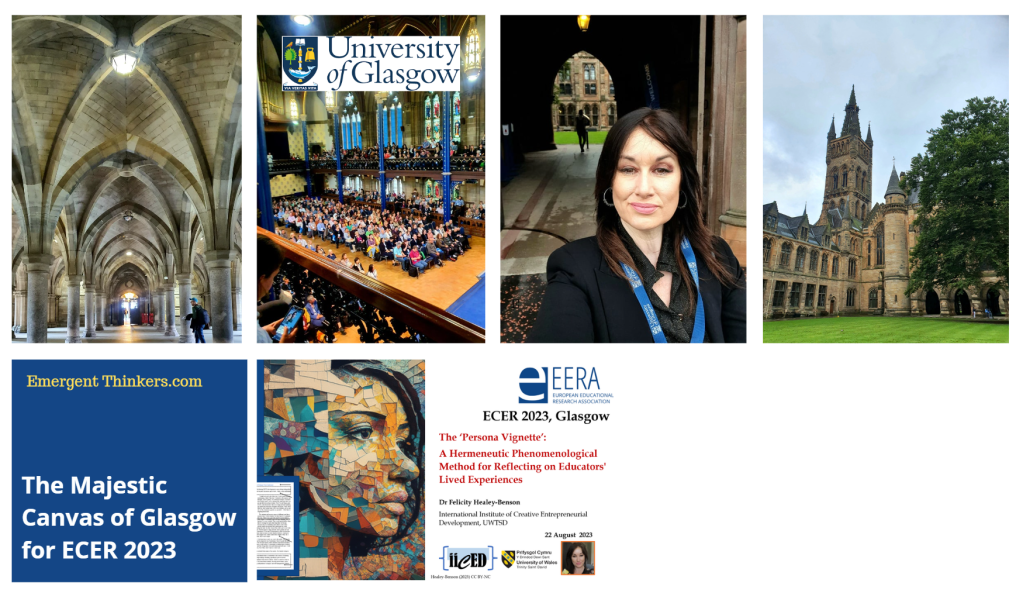
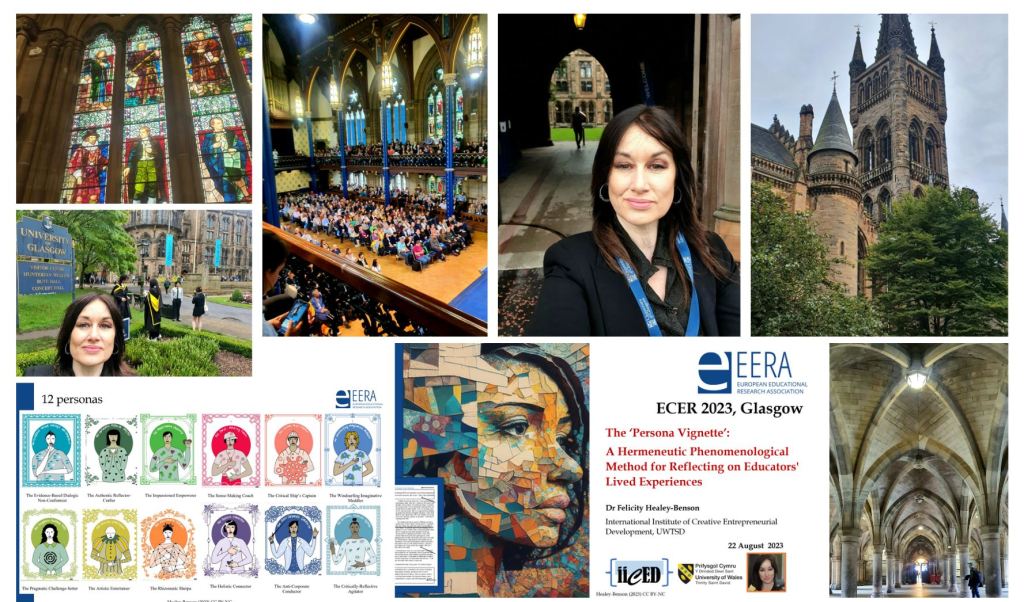
This week, I had the honour of presenting a portion of my doctoral phenomenological research method, the Persona Vignette, at the European Conference of Educational Research (ECER) 2023. This year’s ECER theme, titled ‘The Value of Diversity’ aimed to recognise and celebrate the myriad forms of diversity in education and educational research, whether they be conceptual, contextual, or methodological. The University of Glasgow graciously hosted the event, offering more than a venue but an ambiance, a feeling, a certain… magic.
Whispering Walls and Timeless Tales
Set against the enchanting spire-filled backdrop of Glasgow, the University’s iconic Cloisters were a sight to behold. These archways, with their fluted columns and transverse ribbed vault, are not just architectural marvels but also storytellers of the University’s rich history. Connecting the East and West quadrangles, they lead to the magnificent and iconic Bute Hall and the renowned Hunterian Museum, which themselves house architectural treasure. It’s no surprise that they are used by moviemakers and TV producers.
A City That Narrates and Inspires
Glasgow, as a city, is an artist’s dream. The University’s picturesque campus nestles within a city that stands as a testament to architectural grandeur. Yet the buildings here don’t just stand; they tell tales. Their walls whisper stories of the past, blending the opulence of 19th-century Victorian architecture with the genius of early 20th-century ‘Glasgow Style’ Mackintosh-designed structures, and enriched by the history of the [browns] sandstones and tenements, and the innovation of their modern construction. Yet, beyond this striking breadth of architecture, which easily captivates, Glasgow’s true essence lies in its people. Their warmth, spirit, and cultural richness are the city’s heartbeat. It’s no wonder Banksy chose the Gallery of Modern Art to host his first exhibition in 13 years, a building that faces the infamous traffic cone atop a Duke of Wellington’s statue – testament to the city’s humour.

A Chair’s Reflection
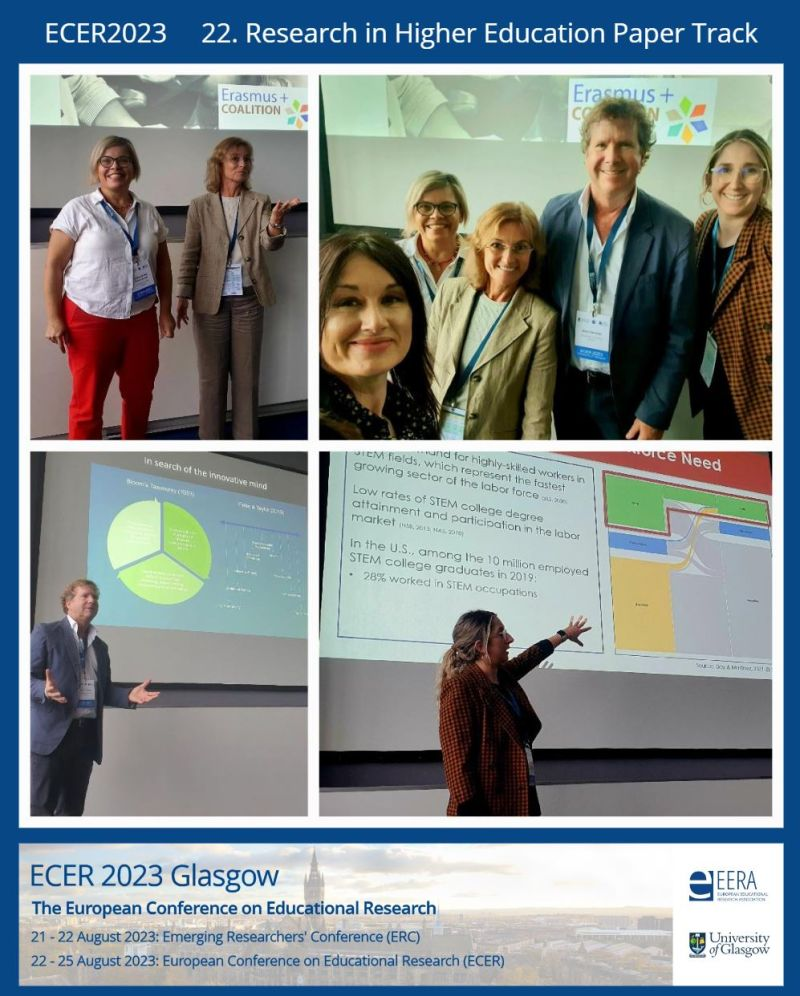
It was with immense pride and anticipation that I was allocated a role of chairing a ‘Research in HE track’. An academic event of this magnitude is bound to be electrifying, but the sheer talent and dedication of the presenters I had the honour to engage with took the experience to an entirely different level. Thank you to Jennifer Freeman of the University of Pennsylvania presenting her team’s paper on addressing unmet STEM workforce needs. Dr. Brian D. Denman’s [Stockholm University] discourse on personalised learning and assessment was depthful and truly stimulating. Representation from the Erasmus + Coalition Project on Inclusive Student-Centred Pedagogy came from Dr. Kallia Katsampoxaki-Hodgetts from the University of Crete and Professor Meeri Hellstén from the University of Stockholm. Their collaborative work and passion for inclusive pedagogy were palpable.
Embracing Roots and Rekindling Memories
Chairing the ‘Research in HE track’ was not just a professional engagement. The venue, the University of Glasgow, resonated deeply with my personal history. Glasgow is part of my maternal grandparents’ story, where they found work and chose to start and raise their family. Though they moved away when my mother was in her late teens, her melodic Glaswegian tones have never been displaced. Being in Glasgow for the conference was therefore, akin to a homecoming. The streets echoed with tales of my ancestors, while the buildings whispered memories of bygone days, each corner seemingly holding a piece of my family’s legacy, and mum’s childhood.
So, I tender heartfelt gratitude to the city of Glasgow, the University of Glasgow staff and student ambassadors, the EERA team, and all the wonderful global presenters, contributors, and over 3500 attendees. A special shout-out to Professor Stephen McKinney and his team, who orchestrated the event seamlessly, ensuring it was stimulating, well-coordinated, and memorable, and to all the event exhibitors.



 Emergent Thinkers™
Leave a comment